

Playground Checkpoint
Predict ten mixed-type results, then add types so wrong values fail loudly instead of slipping through.
The Challenge
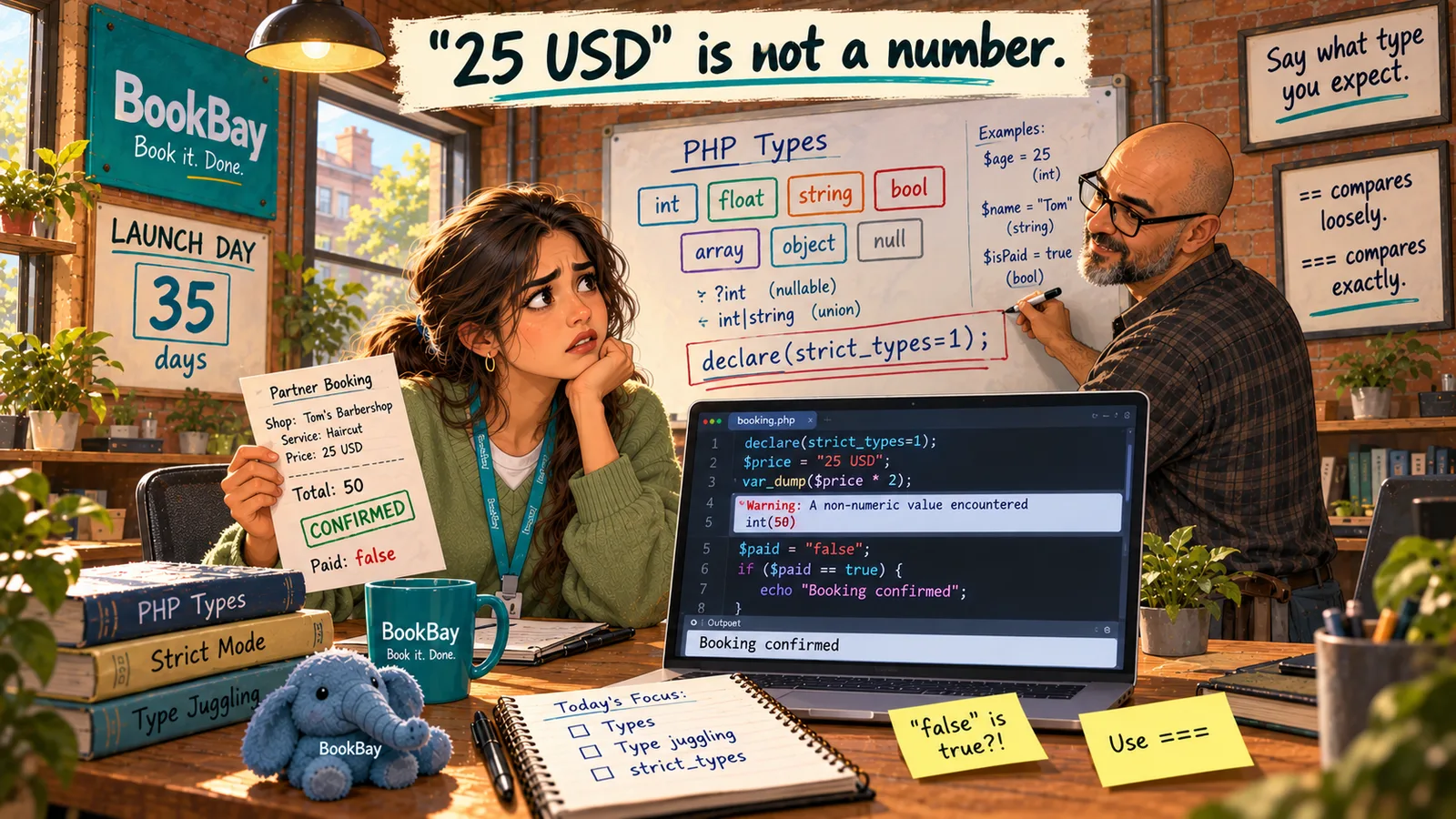
Marcus hands Mia a file with ten short lines of PHP and one untyped function. "Part one: write down what each line prints before you run it. Part two: make the function refuse bad values, then handle the partner's price properly."
Open the starter in the PHP Playground with the button below. Write your guess next to each var_dump() line first — honestly, without running it. Then run the file and compare. After that, follow the comments in part two.
What You Need to Do
- Part 1: for each of the ten
var_dump()lines, write your prediction in the comment before running the file. Then run it and mark which guesses were wrong. For every wrong one, write which chapter's rule explains it. - Part 2: add type declarations to
bookingTotal()— both parameters and the return value — so that the call with"25 USD"stops with a TypeError instead of quietly giving 50. Run it and read the error message. - Then replace the bad call with a proper check: use
filter_var()to turn$partnerPriceinto an int, or reject it with the message shown in the expected output. - Compare
$partnerPaidwith===, so the text"false"does not count as paid. - Keep
declare(strict_types=1);as the first statement. - The final run must print exactly the expected output, with no warnings and no errors.
Stuck? A Few Hints
- For Part 1:
+needs numbers,.needs text,/gives a float unless the result is whole (chapters 2 and 7). - Floats are stored approximately; casts read only the number at the start of a string; only a few strings are false (chapter 7).
- In PHP 8, comparing a number with a non-numeric string compares them as strings (chapter 7).
- For Part 2:
intparameters plus strict types turn "25 USD" into a TypeError (chapter 1). filter_var() returns the int or false — compare its result with=== false(chapter 8).
Ready to Build It?
Opens the Playground, right in your browser — nothing to install.
After the ten var_dump() results, a correct final run prints exactly: 5000 · Rejected price: "25 USD" · Paid: no — with no warnings and no errors. (The ten Part 1 results are in the sample solution — check them only after you've written your guesses.)
Before You Move On
If most of your guesses were right, PHP's type rules are no longer a mystery: you know which types exist, how to declare them — including "or", "nothing" and "never" — how PHP converts between them, and how to check outside data before trusting it. Wrong guesses are useful too: each one is a rule you'll now remember. Next: the operators that juggle all these types — including == and ===.