

In this chapter
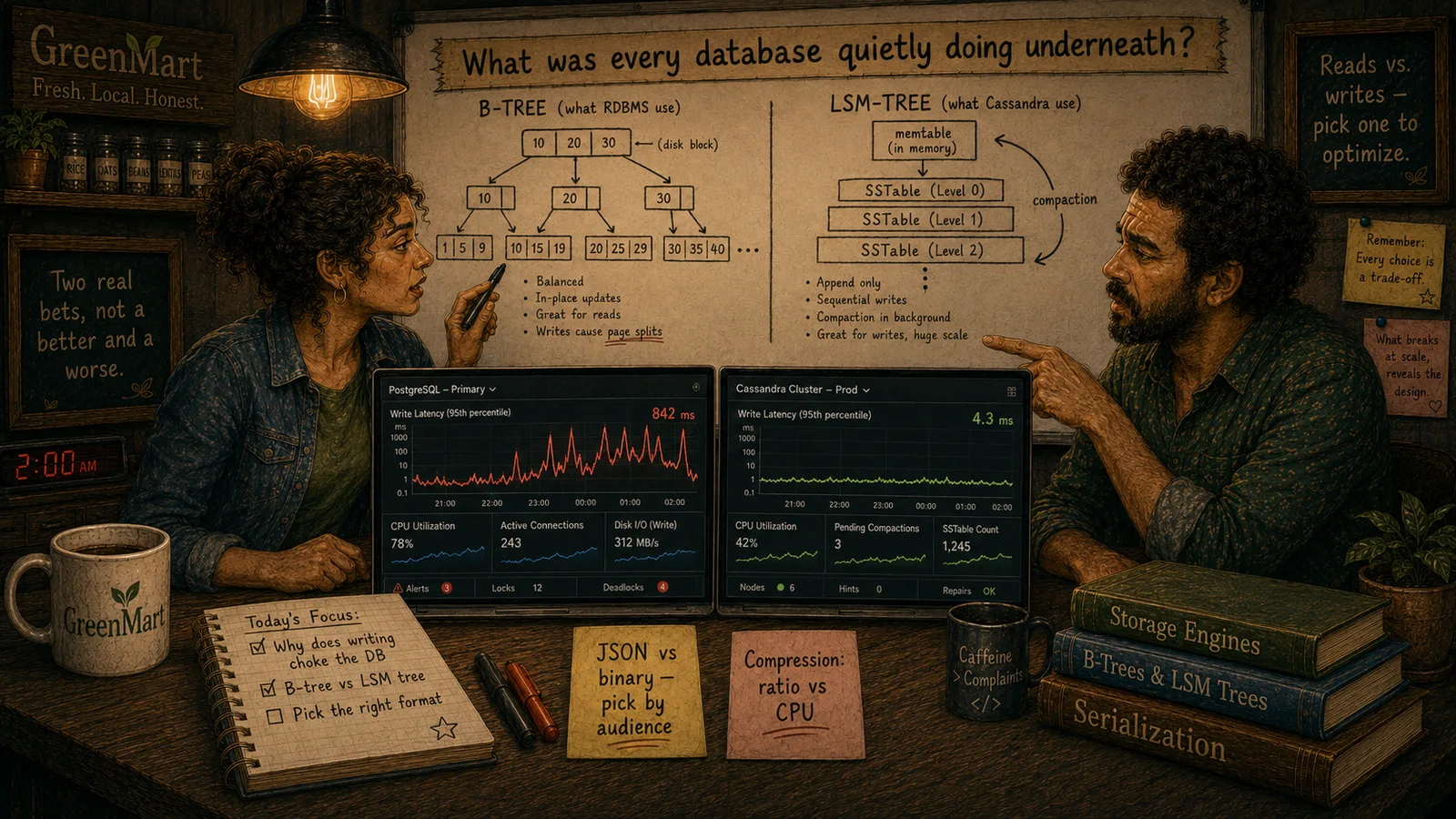
We'll open up the storage engine — the real, physical layer beneath every database deciding how data actually sits on disk, genuinely separate from its query language or data model — and find the real, precise reason GreenMart's relational database struggled under a write-heavy load that its own Cassandra cluster handled easily.
The Problem in Real Life
GreenMart rolls out a real-time inventory event log — every stock change, every scan, every restock, written the instant it happens. Within a day, the main relational database is struggling under the write load. The Cassandra cluster, handling a similar real write volume elsewhere, isn't even breathing hard.
Mike is confused. "They're both real databases. Why would one genuinely struggle with writes the other barely notices?"
They're both databases. Why does one choke on writes the other handles easily?
Mike
The Database GreenMart Queries vs. The Real Engine Underneath It
Genuinely separate from the data model
A storage engine handles how bytes actually sit on disk — a different real concern from tables, documents, or wide columns.
A real, deliberate trade-off: reads vs. writes
No storage engine maximizes both — every design leans toward fast reads or fast writes, never fully both at once.
What Is a Storage Engine?
A storage engine is the real, physical layer of a database actually responsible for how data gets written to and read from disk — genuinely separate from the query language, the data model, or anything else GreenMart's own team interacts with directly. Two databases can look completely different on the surface and still share the same real storage engine underneath; two databases that look similar can have genuinely different ones.
- What a storage engine actually does. Underneath every real query GreenMart runs — a SQL
SELECT, a CassandraINSERT— sits real, physical machinery deciding exactly how that data's actual bytes get arranged on disk, updated, and later found again. This is a genuinely separate real concern from the data model (relational tables vs. Cassandra's own wide-column model, both covered in earlier courses) — the storage engine is what happens after a query decides what it wants, not what the query itself looks like. - Why GreenMart's own incident isn't really about SQL vs. NoSQL. The relational database and the Cassandra cluster use genuinely different real storage engines underneath — and that difference, not the query language or data model, is the real, direct cause of one handling heavy writes far better than the other. This Act's whole real purpose is opening up exactly what that difference actually is, at a physical layer neither database's own earlier introduction went this deep on.
- Two real, different jobs a storage engine can be optimized for. A storage engine can be built to make reads genuinely fast — quick to look up one specific real record — or built to make writes genuinely fast — quick to durably record new data, even under real heavy load. These two real goals pull in genuinely different physical directions, and no single, real design maximizes both at once; every storage engine makes a real, deliberate trade-off between them.
- Two real, dominant families this Act goes deep on. The next two chapters open up the two most common, real answers to that trade-off: B-trees, a real structure that keeps data thoroughly organized for genuinely fast reads, and LSM trees, a real structure that prioritizes genuinely fast writes first, organizing data more thoroughly later. GreenMart's relational database, underneath, is built on the first; Cassandra, underneath, is built on the second — which is the real, precise, physical reason behind this chapter's own opening incident.
GreenMart now has the real, precise question this whole Act exists to answer: not "which database is better," but "what physical trade-off is each database's own storage engine actually making, and does it match the real shape of the workload being asked of it?"
Key Takeaway
A storage engine is the real, physical layer deciding how data actually sits on disk — genuinely separate from a database's query language or data model — and every one makes a deliberate, real trade-off between fast reads and fast writes, which is the actual, physical reason two different databases can behave so differently under the same real workload.
Why This Matters
Every real technology choice GreenMart has made across this whole course franchise — the relational database, Cassandra, DynamoDB, Redis — rests on a real storage engine underneath, and understanding this layer is what lets GreenMart predict, not just observe after the fact, how a given system will actually behave under a new real workload.
GreenMart now has the real, precise vocabulary for what's actually different underneath its own relational database and its own Cassandra cluster. The next chapter goes deep on the first of the two real families: B-trees, the structure behind GreenMart's own read-optimized relational database.